Would you mend?
Lowering the threshold to textile mending through industrial design
“A shirt without a button is rarely spared. Neither personnel nor customers have got the time to fix it.”
— Second hand shop employee
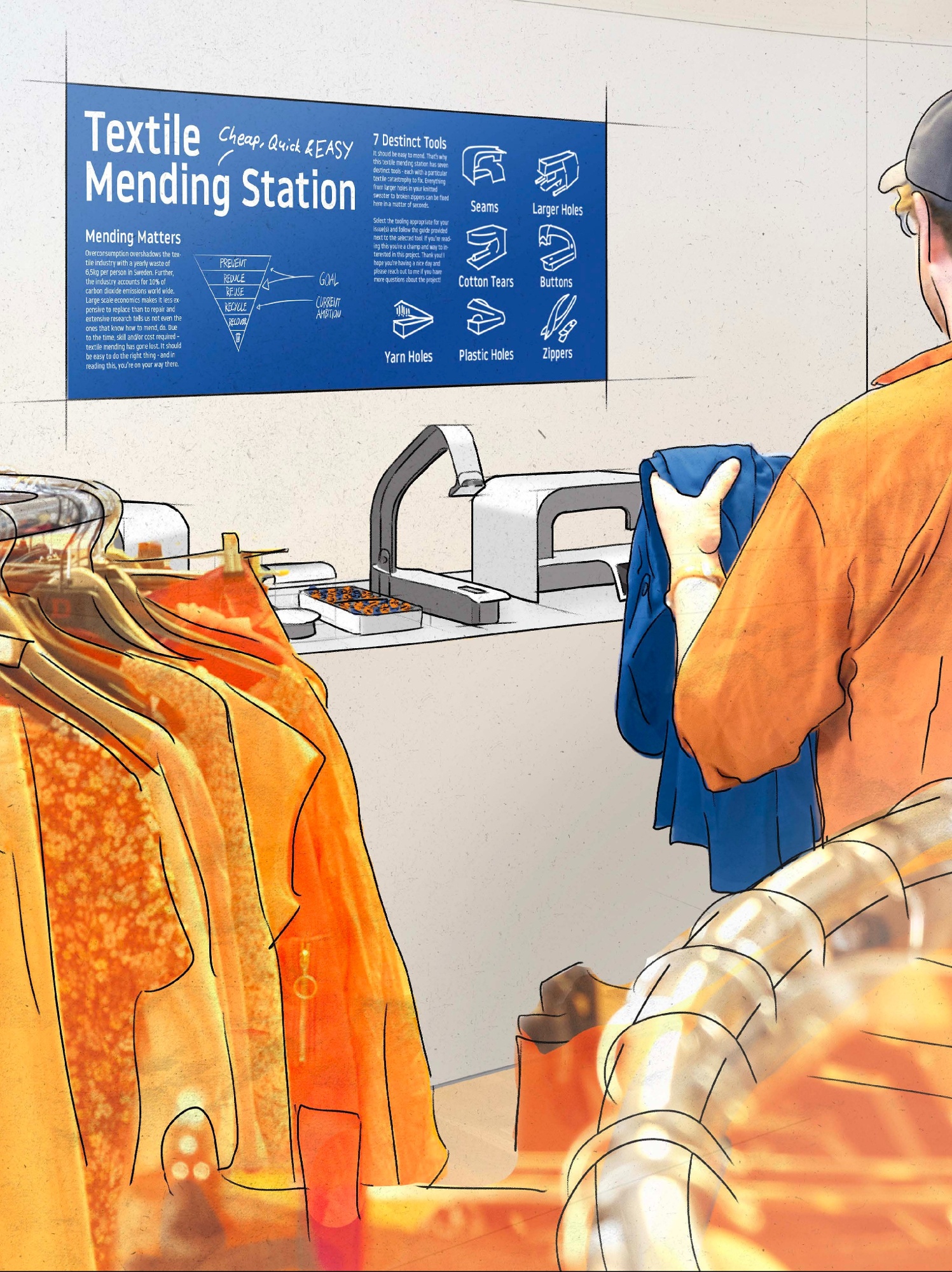
Motivated by the textile industry pollution and its responsibility for 10% of the worlds CO2 emissions and a yearly waste of 6,5kg of textiles per personer in Sweden per year, the project set out to explore solutions to textile waste behaviours from an industrial designers point of view. Through research, system design, user journey design, material mechanics innovation and product design - three outcomes were generated:
- System
- An imagined system solution that proposes textile mending stations at public spaces with tooling corresponding with the largest worn-textile issues.
- Method
- An innovated method of rapidly stapling buttons onto textile that has had buttons missing. With an aluminium matte finish and backplate - it’s versatile and works within current sorting systems.
- Tool
- A prototyped tool for the previously developed method of attaching buttons. This tool along with the method creates an example of tools within the previously developed mending station system.
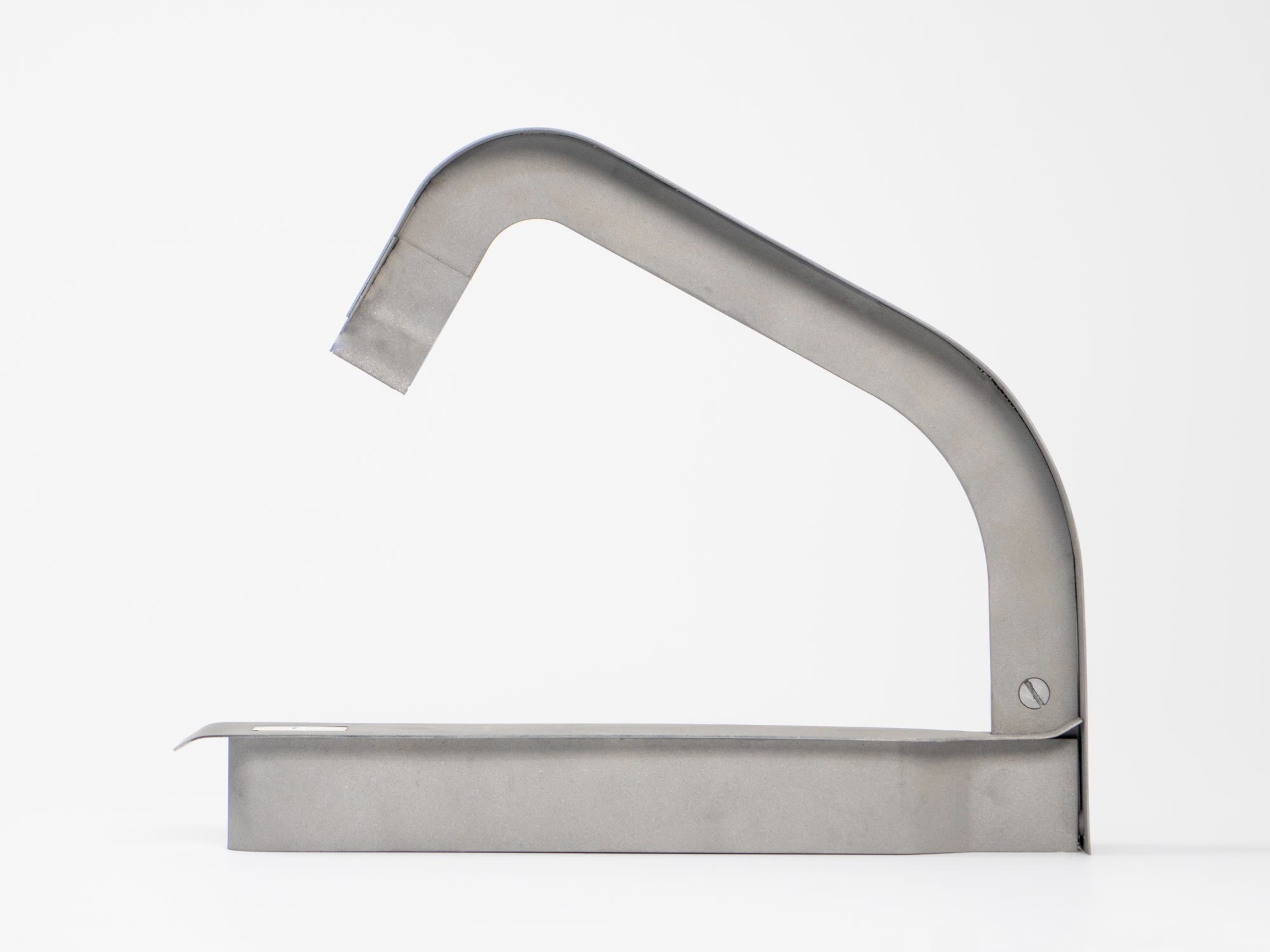
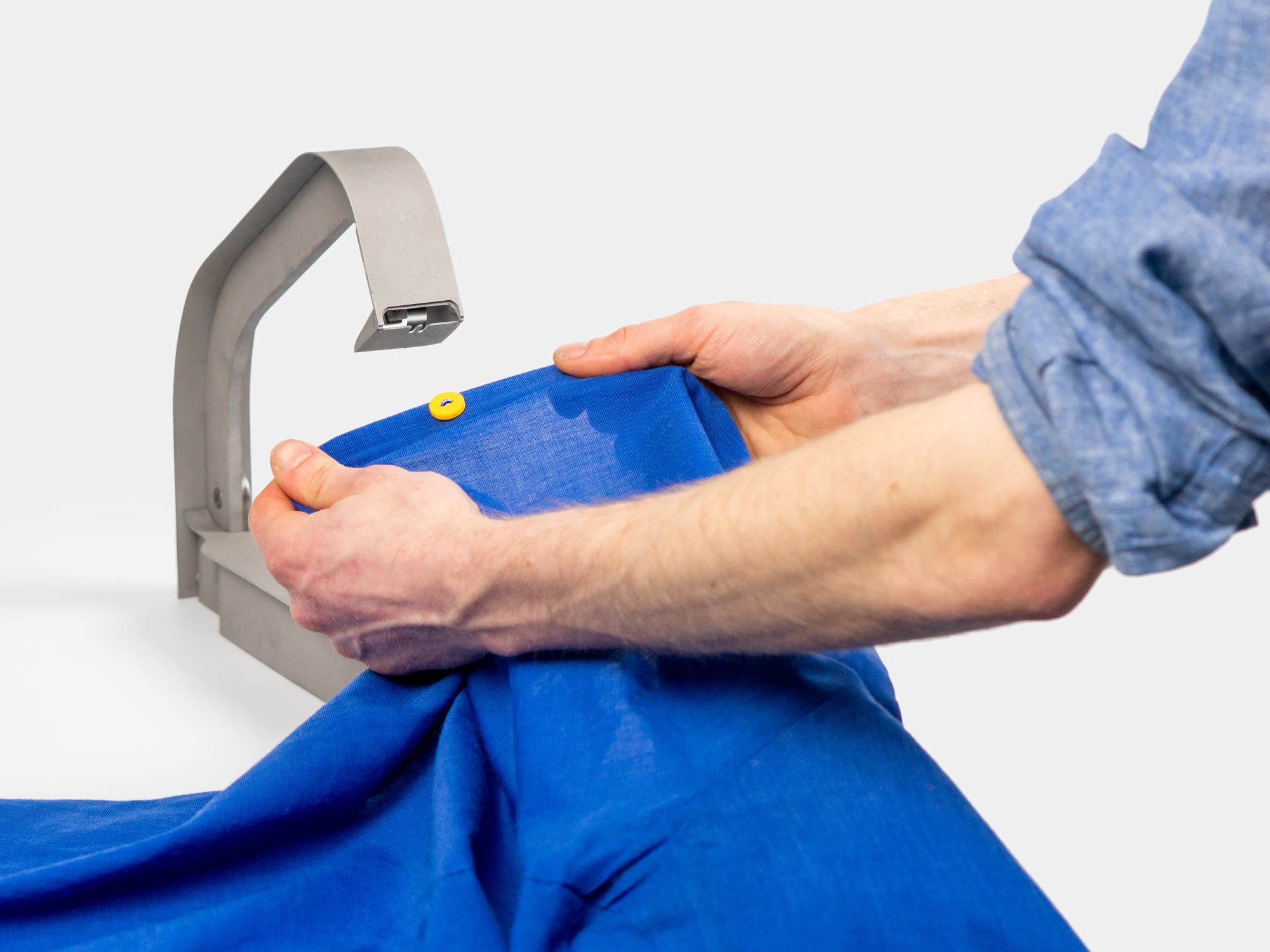
A button on your shirt is ripped off and lost. At your local library or second hand you’ll find an array of up to seven textile mending tools. There’s a tool for every specific mend between broken zippers and crotch holes in your jeans. You take a second hand button and a pin, insert them into the button attaching tool and press the new button on to the shirt. While you’re at it, you fix the hole in your jeans as well and head home with repaired garments.
The full bachelors thesis is available at Lund University student papers.