High performing and upcycled acoustic panelling, at scale
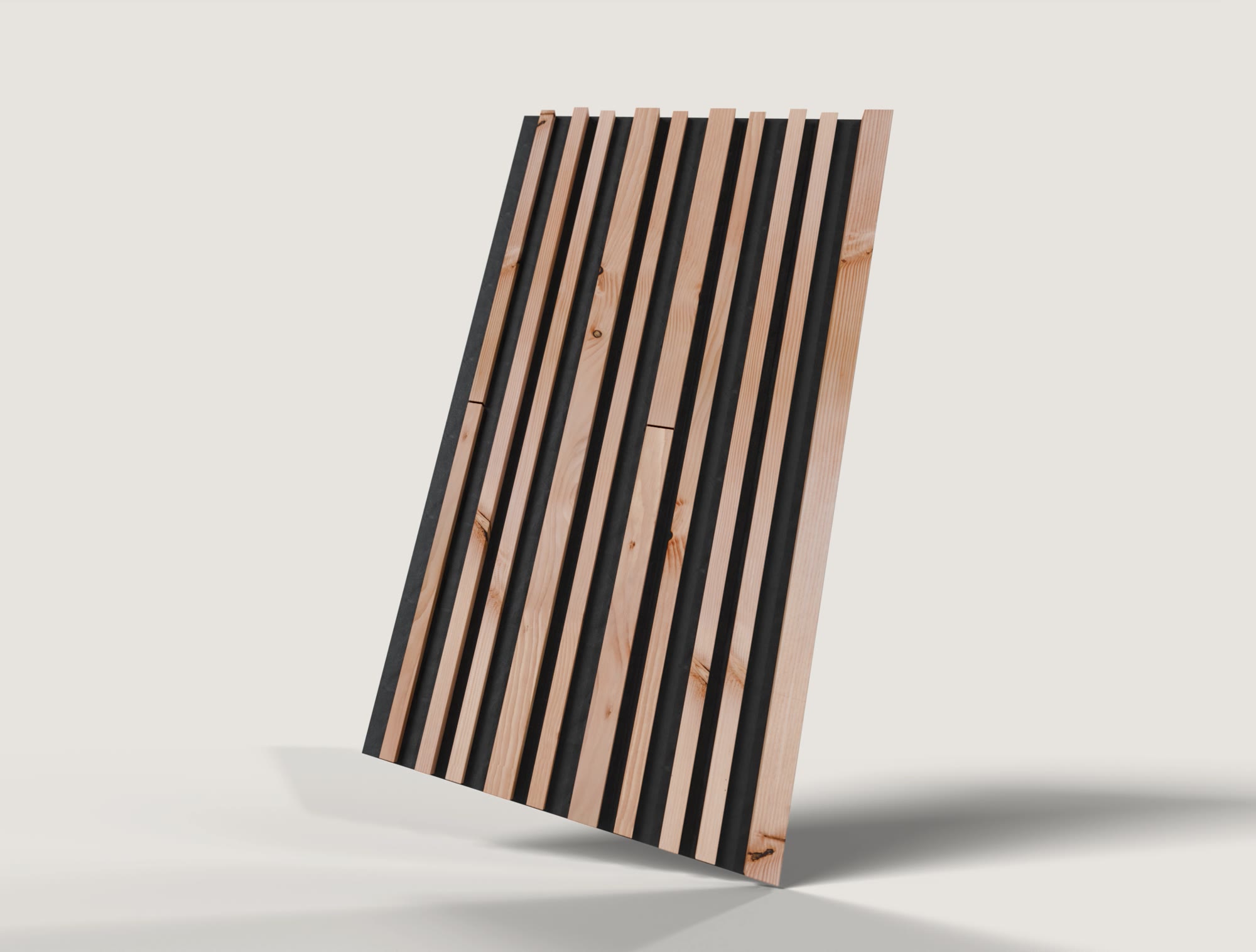 Strict regulations and a high demand for low emission solutions drove the development of an acoustic panel that can meet all stakeholder criterias. We created a solution in upcycled material with minimal footprint. I drove the development of geometry, surface, installation, maintainance as well as the first prototype project delivery.
 |  |
|---|---|
| The largest emitter of greenhouse gases | Acoustic panelling with 60% reduced emissions |
| The building industry’s unsustainable practices sometimes go under the radar. Strange, as it is the single largest consumer of raw materials in the world. It generates roughly 40% of both global emissions1 and waste2. Solutions that demands less of the worlds energy and resources are needed in everything from building envelopes to structural elements to interiors. | Flarø FR manages to stick out in the acoustic panelling market. When compared to the competitor average, it has an estimated 60% emission reduction3. Apart from local manufacturing, this is of course mainly due to Flarø FR being made from waste material, whereas most of the industry use virgin materials. It is, however, most certainly more challenging to design. |
From waste wood to off-the-shelf acoustics
400 000 tonnes of wood is discarded in Denmark every year4. Some is downcycled to chipboard but most is sent for incineration. With Flarø, we’ve designed a path to salvage wood that is deemed unusable by conventional industry.

Discarded douglas flooring
FSC-certified douglas fir is discarded in production due to its irregularities of cracks, knots, skewing and damaged tongue and groove. Thus making it unfit for flooring and furniture production at large. The visual value of the wood is lost and instead it’s incinerated to generate co2-intensive heat. This is unfortunately a far too common story in the wood industry.
Optimised wood processing
Irregularities in the wood are defined, tracked and allowed up to a certain viable definition. The lamellas are sized to fit the original waste-source to reduce both waste and production costs. This ultimately creates a product with a lower GWP and better turnover. Shorter lamellas are also allowed to be combined for an optimised material use.
Designed for disassembly
The production requires no gluing, due to the solid wood nature of the product. The parts are nailed together to last for many life times. But if eventually being discarded - it’s easy enough to disassemble the product in to its parts. Thus letting the material live on as circular as future material and waste management systems allows it to.

Footnotes
-
United Nations Environment Programme and Yale Center for Ecosystems + Architecture, Building Materials and the Climate: Constructing a New Future. ↩
-
Eurostat, Energy, transport and environment statistics - 2020 edition ↩
-
a:gain internal LCA calculation (A1-A3) compared to the inudstry average of 5 EPDs (A1-A3) ↩
-
Danske Miljøsyrelsen, Affaldsstatistik 2022 Revideret udgave ↩